
A giant "30% OFF" banner is hard to ignore. Your bank account, however, never sees the banner. It sees the amount that leaves after delivery, fees, add-ons, and the occasional return. That final number is the one worth comparing.
For a routine reorder, you probably know the drill. For anything expensive, unfamiliar, or difficult to return, spend five minutes on the questions below.
1. Make sure you're comparing the same thing
Use the model number when there is one. Match the size, color, quantity, condition, and included accessories. Two listings can look identical until you notice that one is refurbished, sold by a third party, or missing a part that comes standard elsewhere.
Price matters, but so do the seller and warranty. A few dollars saved is not much of a win if the product arrives without the support you expected.
2. Put delivery into the price
A $60 item plus $9 shipping loses to the same item at $64 with convenient pickup. Watch for expedited delivery selected by default, oversized-item charges, local surcharges, or a membership requirement hiding behind the words "free shipping."
3. Read the sentence under the coupon
The headline gives you the exciting part; the terms explain whether it will actually work. A 20% offer may cover only full-price merchandise, one category, a first order, or a cart above a certain amount. Do not buy an extra item until you know it is truly needed to qualify.
4. Price the possibility of a return
Shoes that may not fit and electronics that may not be compatible deserve a closer look at the return policy. Paid return postage, restocking charges, short windows, and final-sale rules can erase a small upfront saving very quickly.
5. Clear out the checkout clutter
Warranties, subscriptions, gift wrapping, donations, and tiny add-ons have a way of appearing at the last step. Remove anything you did not intend to buy. The same goes for filler products added only to unlock a coupon or delivery minimum.
A quick example
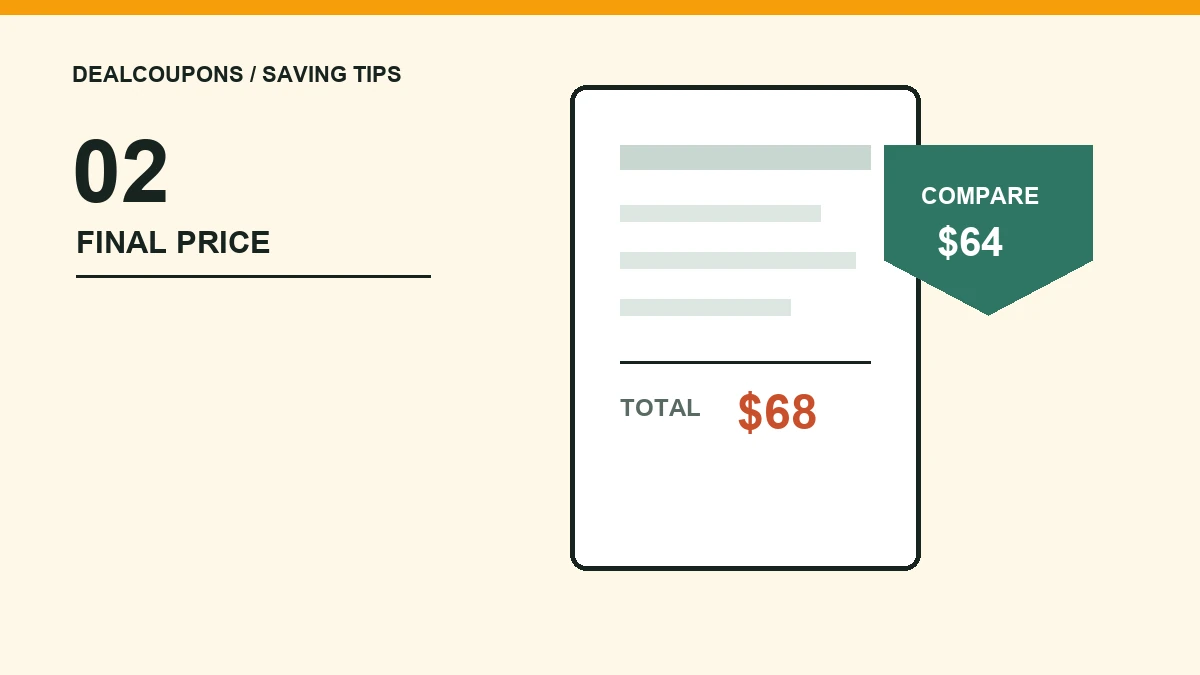
Store A shows shoes at $80 with 25% off, which brings them to $60. Add $8 shipping and the pre-tax total becomes $68. Store B charges $64 and offers free pickup nearby. The less dramatic offer is still $4 cheaper.
Quick math: Final cost = item price + delivery + required fees + likely return costs - confirmed discounts. Count cashback only after you know the purchase qualifies.
Five questions before you place the order
- Am I comparing the same model, condition, and seller quality?
- What will I pay after delivery and required fees?
- Does the coupon cover every product in my calculation?
- What would it cost me to send this back?
- Did the promotion talk me into buying something extra?
The takeaway: The best deal is the lowest acceptable final cost for the product and service you need, not the loudest percentage on the page.